

Dressed to brave the extreme cold, I step out of the inflatable boat and set foot in Antarctica for the first time. I feel a bit clumsy, still getting used to this outfit. I’m layered in four pieces of clothing, including three jackets, all with hoods over my head. Thick gloves cover my fingers. In my pocket, of all things, I carry a bag of ashes, adding to the bulk I feel on the right side of my jacket as I bend down to adjust my snow shoes. I brought the ashes because, like many travelers, I thought spreading them in a special place would be a beautiful tribute. In June, it will have been ten years since my father passed away, and it would have been incredible to share this journey with him. Perhaps a symbolic gesture, like scattering his ashes, could suffice. I am ready to do this during our walk, surrounded by icebergs, mountains, penguins, and the deep blue of the glaciers. Before we start the trail, the guide gives us safety instructions—and my plan begins to unravel.
Antarctica has strict rules: nothing beyond our boots should touch the ground. No sitting, no making snow angels, no backpacks resting on the ground. No littering or dumping liquids. Under no condition can anything be left behind. When I envisioned this ceremony, I hadn’t considered the rules for scattering ashes. But I found out they exist—not just here, but worldwide, with specific guidelines on where and how this can be done, both on land and in water.
Rules and restrictions around the world vary significantly. In the UK, for instance, no license or authorization is needed to scatter ashes at sea—though it’s recommended to avoid busy areas like marinas. In the United States, the legislation varies by state, and the responsible body differs: the Environmental Protection Agency (EPA) regulates ocean burials, while National Parks have their own set of rules. State and municipal public lands, such as parks and lakes, follow local regulations.
Generally, scattering ashes on private land is allowed with the owner’s consent, which includes your own home, a neighbor’s, or even places like cemeteries and sports venues. In public areas, permission depends on state rules, with some regions—such as beaches—completely prohibiting it, even if movies and TV shows suggest otherwise. If the plan is to hold a ceremony at sea, the general rule requires the boat to be at least three miles from shore—spreading ashes from the shore is not permitted. Additionally, the EPA requires reporting the dispersion within 30 days, but no prior form needs to be filled out. The same rules mostly apply to pet ashes, with some exceptions. For instance, the EPA prohibits pet remains from being buried at sea, though some initiatives use ashes to restore coral reefs in Florida.
Technically, scattering ashes in a prohibited place can result in a fine if discovered.
Dressed for extreme cold, a man journeys to Antarctica intending to scatter his father’s ashes • Will McGough/Wake and Wander Media
Violating the Antarctic Treaty
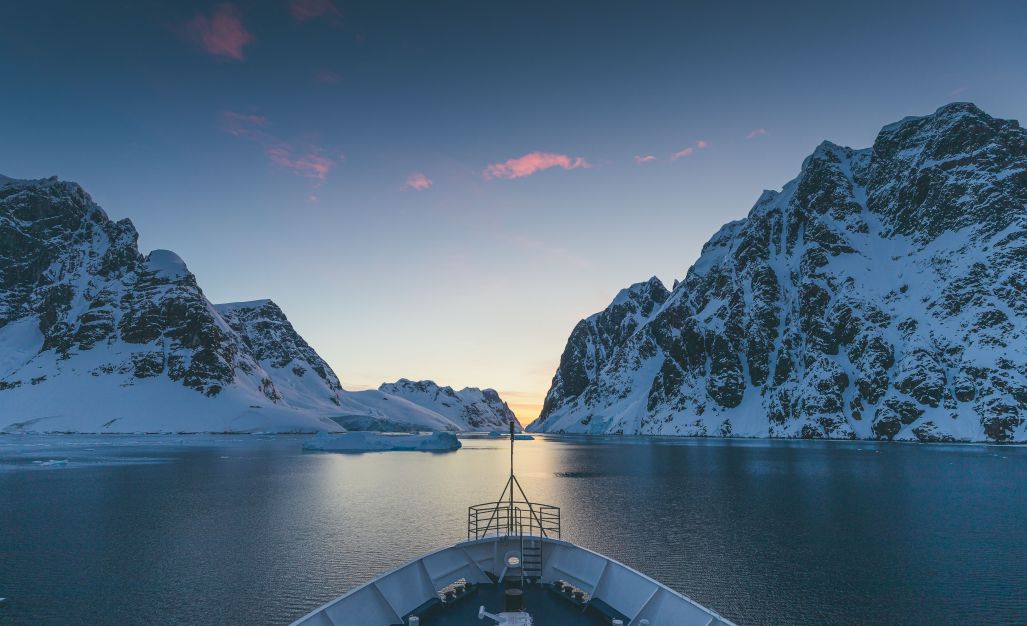
Antarctica follows its own set of rules. It is the coldest, highest, driest, and windiest continent on Earth. Its discovery and exploration began just over 200 years ago, led by legendary figures like James Cook, Ernest Shackleton, Roald Amundsen, and Robert Scott—many of whom perished on this journey. According to my expedition guide, spreading my father’s ashes here would violate the Antarctic Treaty, which protects this pristine environment and maintains the region as a territory dedicated to science and peace. Signed in 1959 by twelve countries, including the United States, the treaty now has almost sixty participating nations.
I respect what he says, but I don’t want to spend the rest of the trip with this bag of ashes burning a hole in my pocket. I imagine “illegally” scattering ashes happens all the time. I’m already here; I won’t give up now. Maybe I can do it discreetly, letting the ashes slip down my pant leg like Andy Dufresne in “The Shawshank Redemption.” Perhaps I can kneel and bury them without anyone noticing.
We continue up to the hilltop, where we stop at a lookout with a view of the lagoon. The landscape is incredible. The sun emerges between the clouds, illuminating the ice blocks in the water.
For the first time, I see the blue Antarctic sky contrasting with the snow-covered peaks. Humpback whales blow steam in the distance, penguins waddle awkwardly over the rocks, and icebergs glisten in vibrant blue hues. The perfect spot. Discreetly, I turn away from the group and reach for the bag.
The growing trend of traveling with ashes
My story isn’t unique. A 2013 Time magazine documentary highlights the rise in cremations, and a 2020 CNN article delves into it further. In the 1960s, less than 4% of Americans were cremated. Today, that number exceeds 50%, with the desire for tributes and ceremonies only increasing.
The custom of spreading ashes during travels has become so popular that Carnival Cruise Lines created a special service for it, arranging private events for ceremonies at sea. Royal Caribbean and other cruise lines also offer this experience, taking families offshore, beyond regulatory reach.
Demand is so high that smaller, independent nautical companies now offer “ash scattering cruises” in various coastal regions, helping people reach the three miles required by law. Some of these companies go beyond the basics, offering anything from a simple “Private Ash Scattering Cruise” to more elaborate packages like “Unattended Ash Scattering with Video.”
Traveling with ashes on commercial flights is generally not an issue, but there are rules about the type of container allowed. These regulations vary by airline, so it’s always good to check with yours before boarding. For international trips, it’s wise to verify local laws regarding cremated remains to avoid problems at customs. Some countries require documents like a death certificate, and they may request such paperwork at immigration.
He is not there
The landscape before me fills me with energy and gratitude, but every time I glance back to check if the guide is still distracted, something feels off.
What kind of memory am I trying to create? One of breaking the law to bury my father illegally? He worked in law enforcement for many years—I know he wouldn’t approve. And what if the guide catches me and feels disrespected? Would that really help me make peace with my father’s passing?
I change my mind. Instead of the bag of ashes, I take out the small prayer card next to it. I inhale deeply and let my eyes travel over the snow-covered hill, which slopes down to the iceberg-filled lagoon. On the front of the card, I see my father’s smiling face—one of the few good photos I have of him. I turn the card over and silently read my favorite poem about loss:
“Do not stand by my grave and weep.
I am not there. I do not sleep.
I am a thousand winds that blow.
I am the diamond glints on snow.
I am the sunlight on ripened grain.
I am the gentle autumn rain.
When you awaken in the morning’s hush,
I am the swift uplifting rush
Of quiet birds in circled flight.
I am the soft stars that shine at night.
Do not stand by my grave and cry;
I am not there. I did not die.”
As I descend the trail, I feel vulnerable yet at peace. The lagoon is in view, and the sound of my boots in the snow becomes almost musical, something therapeutic. I feel the strength of this place flowing through me. The cold air fills my lungs. My mind buzzes with the poem’s lines: “A thousand winds that blow. The diamond glints on snow. He is not there. He did not die.”
Yes, I wanted to spread my father’s ashes here, on my grand adventure to Antarctica. Like many, I wanted to honor him in this way, with this ritual. But in some ways, I feel the mission is already accomplished. I’m here, in this special place, thinking of him. And I still have many more days ahead.
Perhaps it makes more sense to scatter the ashes near home, in the place where he lived. Maybe that’s the best choice.

