

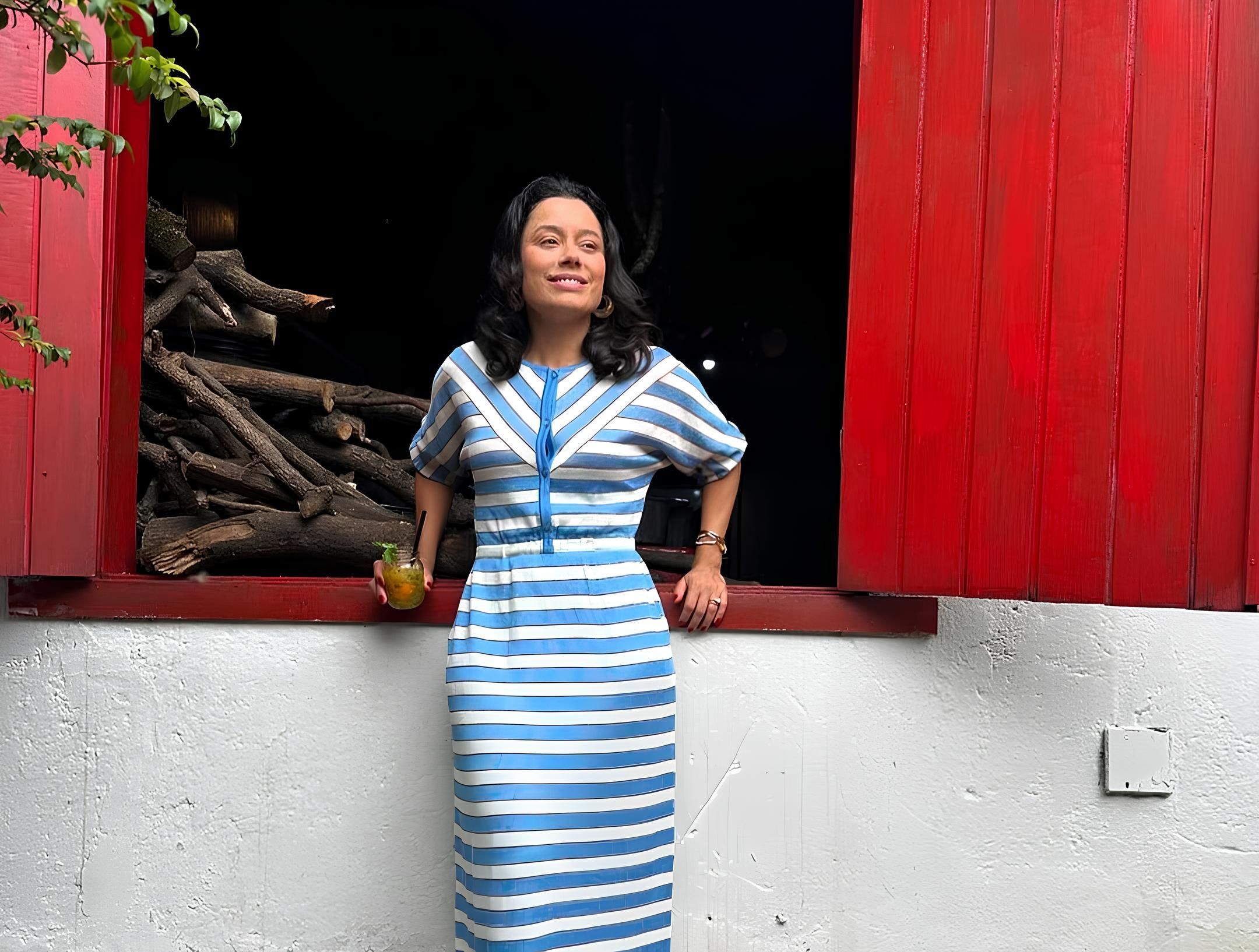
When we search for the flavors of the Southeast, Minas Gerais emerges as a region where food, affection, tradition, and memory blend into a delicious banquet. Discussing Minas means mentioning cheeses, cracklings, artisanal products, and, most importantly, people passionate about their homeland. During my quest for the flavors of the Southeast for the special CNN Travel & Gastronomy: Flavors of Brazil series, I landed in Belo Horizonte to savor a “little bit” of what the state offers. Read more.
To fulfill my mission, I visited the Mercado Central, one of the most iconic tourist spots in the capital city, to sample various cheeses, each more delicious than the last. To culminate the experience, a meal at Xapuri featuring cracklings, angu, and dishes cooked over a wood fire crowned my stop in “Beagá.”
The large market and Minas cheeses
The Mercado Central in BH boasts over 400 stores selling typical culinary delights from Minas Gerais • CNN Travel & Gastronomy
The most striking aromas and flavors of Minas culture intertwine in the aisles of the Mercado Central in Belo Horizonte, located in the city center. Established in 1929 as an open-air market next to Praça Raul Soares, the stalls remained there until 1964 when the sellers gathered to cover the area with a warehouse. Today, 95 years later, the market comprises over 400 shops, offering the best of Minas delights.
Besides the liver with jiló at Bar da Ló and the crackling at Rei do Torresmo, I made a stop at Roça Capital, a typically Minas store with local delights, including antipasti, oils, coffees, sweets, and jams. However, it’s the artisanal cheeses that steal the spotlight. A variety of them can be tasted at the counter.
“Every Queijo Minas Artesanal must be made with four ingredients: raw cow’s milk, salt, rennet, and ‘pingo,’ the natural lactic ferment. Moreover, it must be manually pressed and matured on wooden shelves. Each region has its maturation period. In Canastra, it’s 14 days, and in other regions, it could be from 17 to 22,” explains Eduardo Girão, journalist and cheese specialist.
Tasting the diverse types of this delicacy becomes a true celebration with the recent UNESCO Intangible Heritage title awarded to the “Making Methods of Queijo Minas Artesanal.” The recognition came in December, making it the first Brazilian food culture product to receive the title from the United Nations agency.
Cheeses are produced across the state, but the State of Minas Gerais Agricultural and Rural Extension Agency (Emater-MG) identifies ten microregions as Queijo Minas Artesanal producers. They are: Serro, Serra do Salitre, Araxá, Campos das Vertentes, Canastra, Cerrado, Diamantina, Entre Serras: from Piedade to Caraça, Serras de Ibitipoca, and Triângulo Mineiro.
In Minas, there are over 8,800 establishments dedicated to the production of various types of artisanal cheeses.
Canastra Cheese and Other Delights
Shelves of cheeses at the Roça Capital store, in the Mercado Central in BH • CNN Travel & Gastronomy
One of the best-selling cheeses here is the Canastra. A notable example is the Capim Canastra, one of the first Brazilian cheeses to be awarded in France, having won a silver medal in 2015 at the Mondial du Fromage de Tours, the “Cheese Oscars.”
“The Canastra Cheese has a lower acidity and, as it matures, it becomes spicier. Some producers keep the rind smooth, while others have a rustic one, which wrinkles and shows the natural molds of the property,” says Eduardo.
Another interesting example is the JM Cheese, produced in Alagoa, Serra da Mantiqueira. It’s a cheese that might remind one of Parmesan, with a lighter touch and a hard texture.
Now, the lingering question: should one eat the rind or not? “Often, the rind is part of the experience. It brings crunchiness and complexity in the perception of flavors and aromas. Many of the aromas are found in the rind, but not in the body of the cheese,” Eduardo emphasizes.
If you’re left wanting more and wish to taste Minas cheeses in different ways, my tip is to read this article to plan your next trip to BH.
Typical Minas Food:
1. A Minas banquet’s main dish featured grilled boneless thigh cooked in butter with orange sauce, served with angu, peeled tomato, and curds with zest • CNN Travel & Gastronomy
2. Belly crackling and pururuca from Xapuri • CNN Travel & Gastronomy
3. At Xapuri, Daniela Filomeno enjoys a traditional Minas meal with chef Flávio Trombino • CNN Travel & Gastronomy
Changing the Food Scene
As a proud granddaughter of a Minas native, summarizing Minas Gerais’s culinary traditions in cheeses would almost be sacrilegious. Hence, a meal at Xapuri reveals more of the state’s flavors with a lavish spread.
A must-visit in Belo Horizonte, here, Minas food is treated as a cultural institution. Cheese bread, angu pastries, crackling, jiló with cheese, tropeiro beans, chicken with quiabo, and cachaças abound.
“Minas cuisine started to take this shape and identity with the arrival of the Portuguese. It’s a triad of indigenous, African, and European influences,” says Flávio Trombino, the chef at Xapuri.
As we chat, the wood crackles, and clay pots steam. For lunch, he prepares de-boned chicken thighs and drumsticks, grilled in butter with orange juice.
Minas angu is also present here, traditionally made only with cornmeal and water, but at this establishment, it follows the Italian style with cheese, milk, and butter. The dish is served with roasted peeled tomatoes and curds with zest.
Flávio is the guardian of the wood-fired stove and rustic cuisine, teachings passed down by his mother, Nelsa Trombino, the restaurant’s founder, who passed away in 2023.
For the chef, what embodies the flavor of Brazil? “It’s diversity and richness. Brazil is gigantic. France could fit within Minas Gerais, for instance,” he responds. But I dig deeper: what about the flavor of Minas? The answer is simple but powerful. “It’s affection,” the chef asserts.
South of Minas receives geographical indication for wine production.

